
The Mkhitar Sebastatsi Educational Complex was established in 1989 as an association of structural units, including educational institutions. The High School was created that same year and continues to operate to this day.
Over the years, the High School has had different names and directors:
1989–1993 — Ashot Dabaghyan / Gymnasium
1993–2007 — Mayis Nikoghosyan / Gymnasium
2008–2015 — Gevorg Hakobyan / High School
2015–present — Martha Asatryan / Research High School
With amendments to the laws of the Republic of Armenia “On Education” and “On General Education,” a three-level system was established in 2005:
elementary school (grades 1–4), middle school (grades 5–9), and high school (grades 10–12). In 2008, the process of separating high schools as independent institutions began in the Republic. At that time, three separate senior schools started operating within the structure of the EduComplex — High School, Vocational School, and Art School.
As a result of the reorganization in September 2015, these three senior schools were merged into a single educational institution – Research High School.
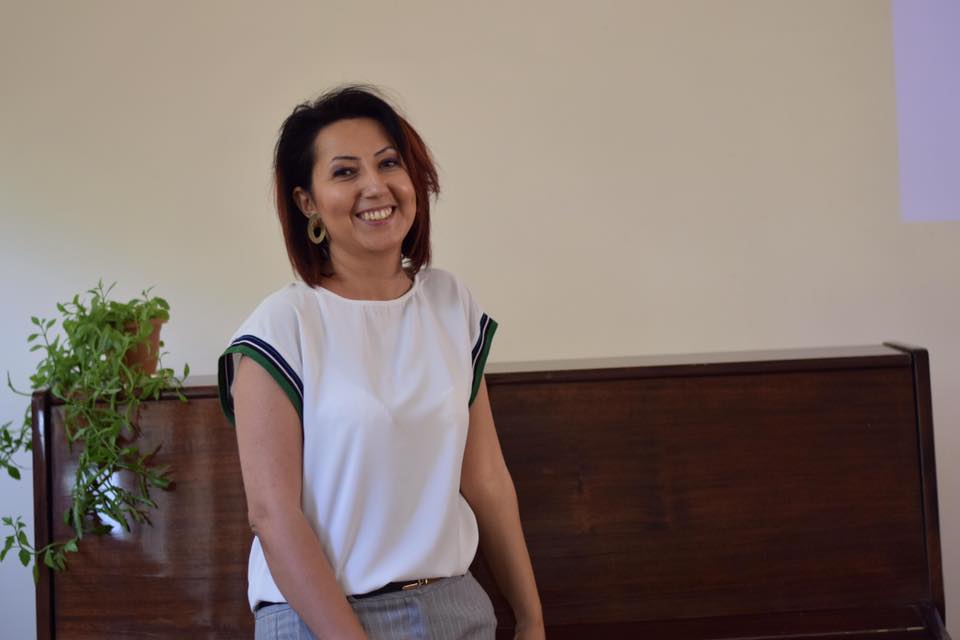
Since assuming the leadership of the Research High School of the EduComplex, in 2015, I, Martha Asatryan, have been involved in a process of deeply transformative educational journey. In this article, I will attempt to present the activities, development, and distinctive features of the Research High School.
The reorganized Research High School began its work with renewed vigor, creating a diverse and flexible environment where students can shape their own individualized learning paths. Ninth-grade classes also became part of the school as a one-year vocational orientation program aimed at identifying students’ interests and guiding them toward professional choices. This period lasted about ten years, from 2015 to 2025. In the continually evolving environment of the EduComplex, changes often occur, leading to more efficient solutions.
The Research High School has its own charter, development program, and official website, ensuring transparency and systematic organization of its activities.
An official admission procedure has been developed for the school as an essential component of its original educational program. According to this procedure, a tripartite agreement is signed between the student, the parent, and the school.
Upon completing the 9th and 12th grades of the Research High School, students receive a certificate in accordance with the regulations of the Ministry of Education, Science, Culture and Sports of the Republic of Armenia, bearing the signature of the Research High School principal.
Since 2021, the Research High School, like other schools in the Educational Complex, has been registered in the unified register of the National Center for Educational Technologies (KTAK), becoming one of around 1,400 schools of general education in the Republic of Armenia. The KTAK website provides open and accessible information about the Research High School’s staff, staffing list, principal’s details, curriculum, and other necessary data about the school.
Since 2015, the Research High School has shown continuous growth. The annual increase in the number of students testifies to the high level of trust and interest of the parent community toward the school. Similar growth has also been recorded in the other schools of the Educational Complex.
Let me give a factual example: as of September 1, 2015, the number of students in the Research High School’s 10th to 12th grades was 233, while as of September 1, 2025, it is 421. You can clearly see the twofold increase in the number of students with the naked eye, and in the attached table, you can see the figures for 2016–2024.
Table 1
| Year | Number of Students in Grades 9–12 |
| 2016 | 276 |
| 2017 | 281 |
| 2018 | 381 |
| 2019 | 476 |
| 2020 | 569 |
| 2021 | 583 |
| 2022 | 595 |
| 2023 | 572 |
| 2024 | 644 |
One of the key features of the educational process is the development of the learner’s individual study plan. At the stage of signing the agreement, each student designs their three-year educational path by choosing a teacher, courses from the offered list, a sports club, as well as a topic and supervisor for their research paper. They also have the opportunity to engage in volunteer work.
The development of the High School is determined by the provisions of the Development Program of the Research High School, which systematizes and deepens the already established educational model, making it more purposeful, modern, and competitive. Continuing the article about the Research High School, I will refer to specific areas of the School’s Development Program.
The key directions outlined in the School Development Program aim to create an educational environment where the learner becomes not only a receiver of knowledge but also someone who applies, creates, and shares that knowledge. In this context, research activity holds an important place as a component of the learner’s individual educational plan. The student develops personal research interests, selects a topic, works with a supervisor, and ultimately makes a public presentation of his/her research paper. This process cultivates analytical thinking, independence, responsibility, and a culture of public speaking.
One of the important directions of the Research High School is also the integration of volunteer activity into the educational process. Students are involved in various areas of the educational complex, ranging from gardening and park maintenance work to educational-production laboratories and educational projects. Volunteering becomes an important platform for gaining social experience, self-discovery, and the development of civic responsibility.
The development of the content of military-sports camps is also one of the key directions of the program. They are becoming not just individual events, but an ongoing educational process throughout the year, which includes hikes, field exercises, mountain climbing, and firearms training. This system contributes to the development of students’ physical, volitional, and teamwork skills, as well as shapes responsible and organized individuals.
International cooperation is one of the important components of the school’s development, creating an environment for genuine communication and exchange of experience. Students participate in international programs, conferences, and educational exchanges, collaborating with various organizations and diplomatic institutions. This process develops their language abilities, intercultural communication, and worldview.
In line with the demands of modern education, distance learning is also developing in the school, ensuring access to education regardless of time and place. Distance education fosters the learner’s independence, self-organization, and digital skills, becoming an additional yet fully valid form of teaching-learning process. If we go back to the distant year of 2015, there was just one student enrolled in the distance program, while today, in 2026, there are about 40 students from different parts of the world.
The organization of education in the 12th grade is also one of the major achievements of the author pedagogical program, which has been developed, publicized, and reflected in the 2025 amendments to the State General Education Standards. The “Farewell” project implemented in the 12th grade is a unique platform where students sum up their educational journey, presenting achievements, projects, and personal growth. It is not only a concluding stage but also a significant experience in self-expression and the formation of self-awareness.
An important individual project for the school’s students is also the “Student-as-Teacher” project, within the framework of which 11th–12th grade students pass on their knowledge and experience to younger students. This model develops communication, collaboration, leadership, and responsibility skills, while fostering a unified learning community.
Thus, the development program of the Research High School coordinates all components of the educational process, ensuring the student’s comprehensive growth. An educational environment is formed where the student acquires not only knowledge but also essential life skills—independence, initiative, cooperation, and responsibility. It is the combination of these values that makes the school an attractive, trustworthy, and competitive educational institution.
Educational environment
The formation and development of the Research High School’s educational environment has its own continuous history, which began back in 1989. The main school building, where the Research High School is currently located, has undergone numerous changes and improvements over the years—implemented not through state-funded renovations, but through resources and means created within the educational complex itself.
In this respect, the EduComplex has cultivated a unique culture, where the environment is not merely given but created and continuously developed by the community. It is important to emphasize that the building has never been renovated with state funds; nevertheless, the environment has been constantly improved and enriched, evolving into a living and dynamic platform for the educational process.
The EduComplex’s Sports School is also housed in the main school building. It is unique within Armenia’s general education system, as a comprehensive sports model operating within the framework of a general education school. This provides students with the opportunity to choose a sport: volleyball, basketball, football, fencing, archery, shooting, judo, gymnastics, or swimming and achieve success by taking advantage of the specialized sports environment.
One of the key directions in the renovation of the building has been the utilization of the basement spaces, which have been completely transformed into educational laboratories. These now house an engineering and technology lab, a woodworking workshop, and music clubs that provide a genuine environment for practical learning. These areas serve not only as places for developing technical skills but also as platforms for creativity, experimentation, and project-based work.
Students and teachers have continuously played an active role in the process of shaping and improving the educational environment. With their participation, efforts have been made both to beautify the space and to create new educational facilities. This participatory culture fosters a sense of ownership, responsibility, and caring attitude toward the environment.
As a result, a simple, transparent, open, and appealing educational environment has been created—one that promotes free thinking, collaboration, and creative work. This environment is not only a physical space but also a system of values where the learner feels like an active participant and creator.
The English Translation by Lilit Melkonyan