

With deep respect and gratitude to the cherished memory of my dear senior colleague,
Gayane Terzyan
Introduction
Improving the quality of education in today’s educational system requires the implementation of innovative teaching methods. Traditional lecture-based instruction often fails to ensure sufficient student engagement and does not fully contribute to the development of practical skills. It should also be taken into account that college students are no longer children and are approaching the age at which they may be regarded as adults. This raises an important question: How should we teach the adolescent-adult learner—an individual who is constantly occupied, whose time is limited, and who is often reluctant to spend it acquiring theoretical knowledge that, in their view, lacks immediate practical value?
The purpose of this article is to present the teaching methods employed by an instructor of marketing and to demonstrate how methods used in teaching other disciplines can be modified and adapted to the process of marketing education. The article also aims to develop and introduce teaching methods that are particularly effective for the study and instruction of marketing.
To achieve this objective, the author has set the following tasks:
- to examine international best practices in teaching within this field;
- to collaborate with colleagues, become acquainted with the experience of more seasoned educators, implement the methods studied, and subsequently modify and adapt them to the specific characteristics of the course;
- to develop new teaching methods and approaches based on the author’s own instructional experience.
This article may be of interest to both novice and experienced educators who wish to review and improve their teaching style and who are searching for new and effective ways of facilitating learning. It may also be useful for students taking their first steps in the field of teaching and working with beginner learners within the framework of student-as-teacher projects. In addition, the article may be valuable for professional trainers seeking innovative methods for designing and delivering training courses.
A study of teaching methods for adolescents should appropriately begin with andragogy, the discipline that examines adult education. Adolescents, who increasingly perceive themselves as mature and independent individuals, naturally seek practical and applicable knowledge that can later support their professional careers and help them earn an income. At the same time, it is important to recognize that practical knowledge, without a solid theoretical foundation, cannot possess lasting value.
Andragogical Methods and David Kolb’s Experiential Learning Cycle
As is well known, andragogy is the field of study concerned with the education of adults and the methods of teaching them. It provides valuable insights into the distinctive characteristics of the adult learning process. Research in this area demonstrates that there is no single universal method or “ready-made formula” for effectively educating either adults or adolescents.
When discussing scholarly approaches to this field, it should be noted that, in addition to andragogy, significant contributions have been made by neuroscience, experiential learning, and transformative learning.
Adult learners are generally aware of the importance of education, actively engage in the learning process, and expect to see practical outcomes from their studies. However, the principles of andragogy are not always equally effective when applied to adolescents. Not all adolescents fully appreciate the value of education, and decisions regarding their future profession are often influenced by their parents rather than made independently.
The theory of transformative learning enables individuals to change their frames of reference by critically re-evaluating previously held assumptions, beliefs, and stereotypes. This is particularly important in the contexts of professional retraining and change management. Transformative learning explains how adults learn through moments of insight that fundamentally reshape their understanding. The theory is based on the premise that learning occurs when new knowledge is integrated with prior experience or when existing beliefs are viewed from a new perspective.
Finally, there is the theory of experiential learning. The Chinese philosopher Confucius once observed: “Tell me, and I will forget; show me, and I may remember; involve me, and I will understand.” No textbook can provide knowledge as profound as the experience acquired through independent action. Experiential learning theory maintains that meaningful reflection on practical experience lies at the heart of adult learning. Adults learn most effectively by doing rather than by merely memorizing facts, figures, and definitions from books. The same principle applies to adolescents. Young people learn best when they have the opportunity to experiment, to “experience” knowledge firsthand, and to become convinced of its relevance to real-life situations.
David Kolb identifies four stages in the experiential learning cycle:
- Concrete Experience — the learner engages in a real or simulated situation.
- Reflective Observation — the learner reflects on and analyzes the experience.
- Abstract Conceptualization — conclusions are drawn and theoretical concepts are developed.
- Active Experimentation — newly acquired ideas and concepts are applied in practice.
An examination of this learning cycle leads me, as an educator, to conclude that marketing education should involve more than the transmission of theoretical knowledge. It should also foster students’ analytical thinking, creativity, and communication skills. From this perspective, interactive and experiential teaching methods assume particular importance, as they encourage students’ active participation in the learning process.
Teaching Methods Applied in Marketing Education
As the author, I began reflecting on these issues from my very first days at the educational complex. I studied the experience of senior colleagues, implemented a variety of teaching methods in my classes, and subsequently modified and adapted them to meet the specific requirements of marketing education.
The methods presented here are not limited to the teaching of marketing; they may also prove valuable for educators in other disciplines. The article additionally introduces several original teaching methods developed by the author on the basis of personal teaching experience and classroom observations.
In teaching marketing, as in all other subjects, the College of the Mkhitar Sebastatsi Educational Complex follows a student-centered approach founded on the principle of learning by doing. Every topic is accompanied by a practical assignment that enables students to apply their knowledge in authentic or simulated real-world situations.
The projects and business plans developed by students are published on the author’s online blog. This practice fosters a sense of responsibility, encourages higher-quality work, and provides students with an authentic audience for their learning outcomes. Classroom activities emphasize discussion, the exchange of ideas, and creative thinking, thereby creating an active and collaborative learning environment.
The following sections present the principal teaching methods in greater detail, accompanied by practical examples.
Group Work
Group work is one of the most widely used teaching methods. It helps reveal not only students’ theoretical knowledge and practical abilities but also their soft skills—the interpersonal and communication skills that enable learners to participate confidently in a team, represent the group, express their opinions persuasively, and contribute effectively to collaborative work.
Students work in teams to develop marketing strategies, business plans, and project proposals. In practice, group work is usually integrated into other instructional methods rather than functioning as a stand-alone method. In our view, it serves primarily as a pedagogical tool that supports and enriches other teaching approaches rather than constituting an independent methodology in its own right.
Every group activity acts as a catalyst for interaction among learners. On the one hand, it promotes the acquisition of theoretical knowledge and practical skills; on the other, it provides an opportunity to observe how students function within a team. Some students occasionally prefer to work individually and request independent assignments, while others respond to teamwork with strong emotions. Such situations allow the instructor to identify individual characteristics and, when appropriate, guide students in developing their collaborative competencies.
Nevertheless, group work remains an indispensable component of the College’s educational practice and is consistently incorporated into the teaching process.
The Case Study Method
The case study method enables students to analyze authentic or realistically simulated business situations and propose appropriate solutions. It develops analytical thinking, encourages students to apply the theoretical knowledge acquired during the course, and strengthens their decision-making skills.
This method is widely used in courses such as Merchandising, Marketing Process, and first-year elective subjects. It is also applied in the Entrepreneurship module, where students are required to establish a hypothetical business and develop a comprehensive business plan. They are encouraged to design their projects within the context of Armenia’s actual economic conditions, thereby ensuring that their proposals are realistic and practically relevant.
Examples of student projects include:
- Store Layout Design and the Application of Merchandising Techniques
- Business Plan Development
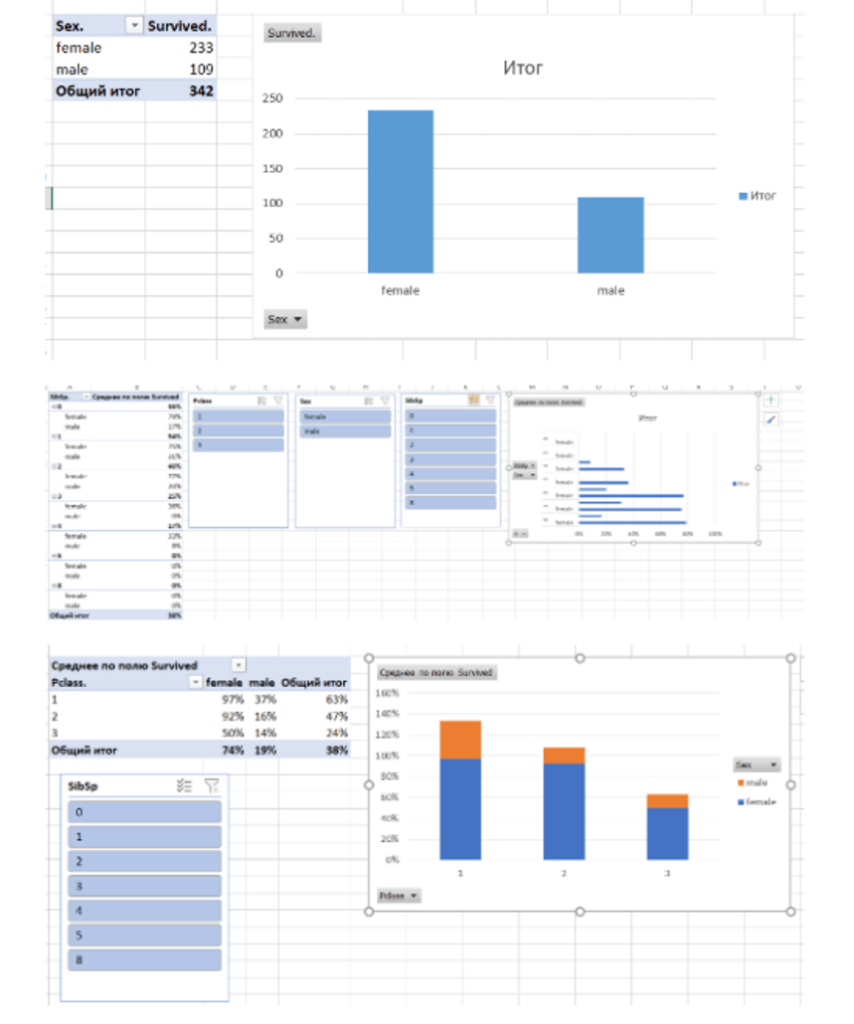
- Practical Data Analysis within the Data Analytics Course
- PEST Analysis
Students analyze data using Microsoft Excel and present the results through visualizations, thereby developing both analytical and digital competencies.
Educational Games
Educational games are among the most popular teaching methods from students’ perspective. They provide an effective means of moving learners from passive listening to active participation. Games reduce psychological barriers, increase motivation, and create a safe environment in which students can apply newly acquired knowledge in practice.
One of the most effective forms of educational games is role-playing (Role Play). Students assume different professional roles—such as marketing specialist, customer, business owner, or sales manager—and simulate authentic market situations. This method enhances communication skills, reduces anxiety and self-consciousness, and develops learners’ ability to make decisions under pressure. Role-playing is consistently one of students’ favorite classroom activities because it places them in psychologically challenging yet safe situations, allowing them to experience real-life professional interactions while developing confidence and resilience. This method is used extensively in the Entrepreneurship and Sales Skills modules. Examples include Brainstorming Activities and Sales Skills Simulations. In addition to role-playing, another highly effective approach is gamification, which incorporates game elements into the learning process through points, rankings, badges, and achievements. Gamification helps sustain students’ engagement and motivation throughout the course.
Another valuable instructional technique is the use of simulation-based case games, in which students solve non-routine problems under conditions of limited time or resources. Many of these activities involve creative or associative thinking. Examples include The Entrepreneur Persona exercise and the Matchstick Challenge.
Field–based Practical Work
Field-based practical work is one of the most highly valued instructional methods among marketing students. It involves collaborative learning outside the classroom in authentic field settings. Study locations are typically selected in the vicinity of the educational institution or within the students’ local communities, although projects are occasionally conducted in other cities to investigate the practices of local businesses and retail establishments. Students are generally assigned to investigate or analyze a particular marketing phenomenon or business process. In many cases, they also provide practical marketing recommendations to local shops or organizations, thereby applying their knowledge in real-life contexts.
The method consists of three interrelated stages:
- Theoretical Stage – studying the relevant theoretical material and discussing the fieldwork guidelines;
- Field Stage – conducting the field investigation, including data collection, observation, photography, and documentation;
- Analytical Stage – returning to the classroom to analyze the collected data, draw conclusions, and present the findings.
This approach has consistently demonstrated its effectiveness. It strengthens students’ teamwork skills, promotes efficient task allocation, facilitates a deeper understanding of theoretical concepts, and develops effective time-management skills under authentic working conditions.
Examples of field-based projects include:
- Analysis of Merchandising Principles
- Retail Store Layout Analysis
- Evaluation of Window Display Design
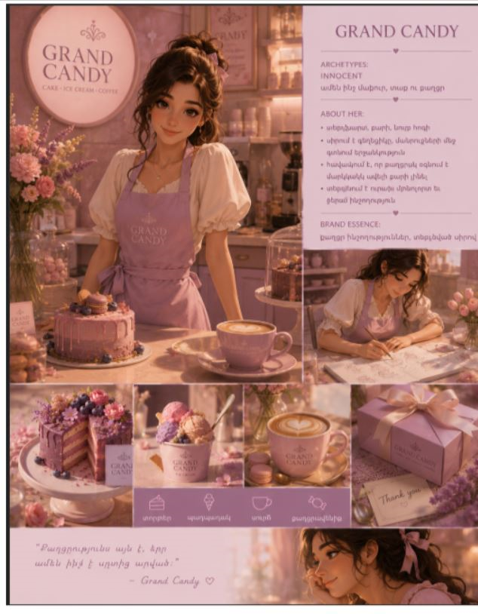
- Development of Brand Archetypes
One example is the Brand Archetypes Project, in which students used artificial intelligence tools to develop brand archetypes for Grand Candy and Dan Dessert.

The Jigsaw Method
The Jigsaw method is particularly effective when students are required to master extensive theoretical material. The learning content is divided into several sections, while the class is organized into the same number of groups. Each group studies one section of the material and becomes the “expert” on that particular topic. Once every group has mastered its assigned section, the groups are reorganized so that each newly formed group includes one representative from each area of expertise. Every student is then responsible for explaining the section they have studied to the other members of the new group, ensuring that all participants understand the material. As a result, students in the newly formed groups teach one another, enabling every learner to acquire a comprehensive understanding of the entire topic. As a final stage, a competition or assessment activity is organized to determine which team has demonstrated the most thorough understanding of the learning material.
Collaborative Book Reading
This method represents a simpler variation of the Jigsaw approach. Its primary purpose is to encourage students’ interest in professional literature while fostering a culture of academic reading. Students are assigned a chapter from a professional book, which is divided into sections for group members to read and study. At the end of the lesson, each section is presented to the class. An essential requirement is that every presentation should be supplemented with authentic examples and practical observations that extend beyond the information provided in the book. This approach enables students, over the course of several class sessions, to read professional literature, discuss it collaboratively, analyze its content, and deepen their understanding through shared learning.
Integrating Digital Tools and Artificial Intelligence into the Learning Process
Teaching is supported by a variety of online platforms that facilitate interactive learning and provide immediate feedback. These tools are used particularly actively within the framework of the “Student-as-Teacher” projects, where students themselves design and deliver learning activities. Students use platforms such as Quizizz, Canva, and other digital applications to make classroom activities more interactive and engaging.
In recent years, artificial intelligence (AI) has also become an increasingly valuable component of the learning process. AI encourages students to create useful educational materials and marketing-related content, an important competency for future marketing professionals. One example is the development of brand archetypes using AI tools. This project effectively combines two instructional approaches discussed in this article: field-based practical work and the integration of artificial intelligence into the learning process.
Conclusion
The findings of this study suggest that effective marketing education requires more than the transmission of theoretical knowledge. It calls for the creation of a learning environment in which students become active participants in the educational process. The integration of interactive, experiential, and practice-oriented teaching methods enables learners not only to acquire knowledge but also to develop analytical thinking, creativity, communication skills, and the ability to work collaboratively. Teaching experience demonstrates that adolescent and adult learners achieve the best learning outcomes when they understand the practical relevance of what they are studying, actively participate in the learning process, and are given opportunities to test and refine their own ideas. Consequently, one of the educator’s most important responsibilities is to establish meaningful connections between theoretical knowledge and authentic professional practice. The methods presented in this article contribute to a more flexible, dynamic, and authentic learning environment that closely reflects real workplace conditions. They foster learner autonomy, responsibility, and professional self-confidence—qualities that are essential in today’s rapidly changing world. It may therefore be concluded that effective marketing education is possible only when educators continuously explore, critically reflect upon, and creatively adapt their teaching methods in accordance with the age, psychological characteristics, and professional needs of their learners.